A Bosch CRIN 4.2 injector from a Detroit DD13, DD15 or DD16 is rebuilt by testing it first, releasing the solenoid assembly without twisting it against its pins, cleaning and measuring every component, replacing the control valve, nozzle and seals that fail inspection, then validating the result on a calibrated bench with ISO 4113 fluid.
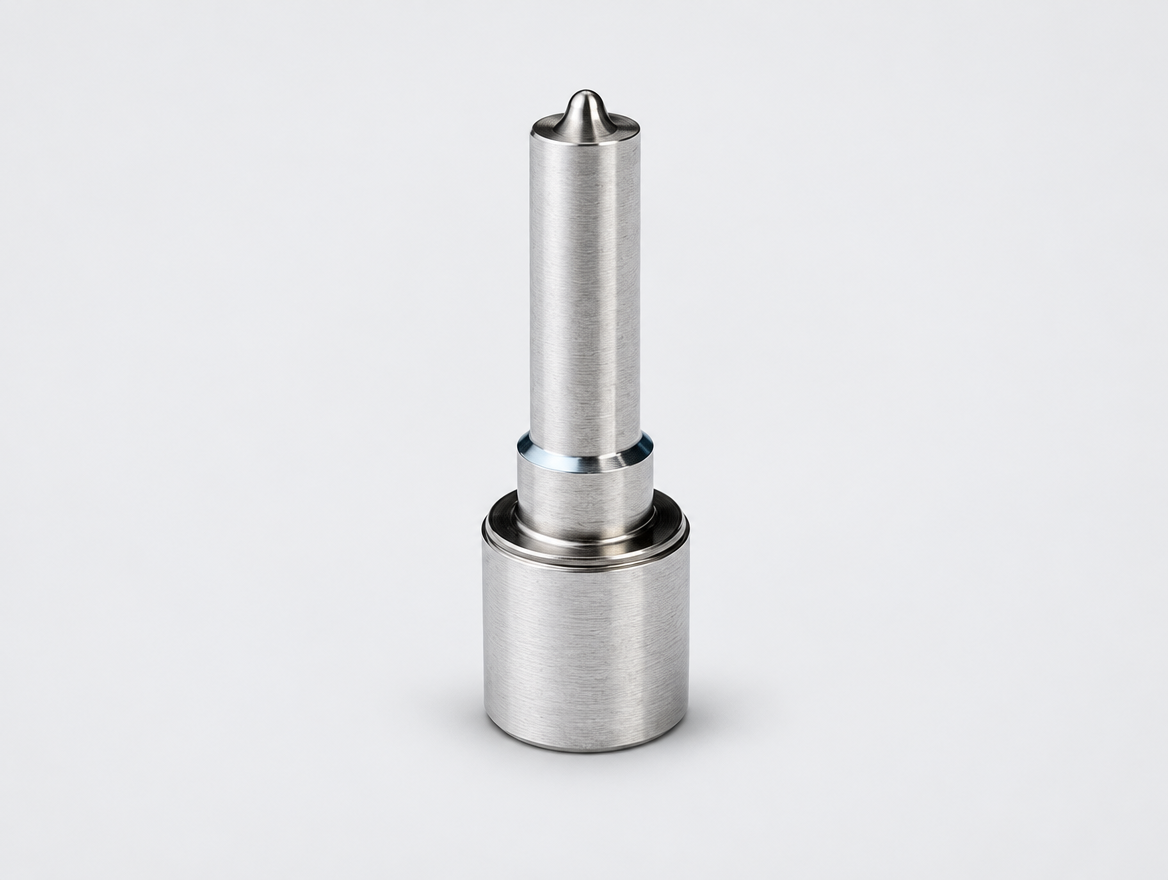
Why the DD15 injector is rebuilt at component level
The Detroit DD13, DD15 and DD16 use Bosch common rail injectors, and the injector is the part of the fuel system most often rebuilt rather than replaced. A rebuild keeps the injector body, which carries the machined bores and the electrical connector, and replaces the parts that wear: the nozzle, the control valve, the shims and the seals.
The risk in a CRIN 4.2 rebuild is mechanical, not hydraulic. The solenoid connects to the body through fine pins, and a solenoid that is twisted, pried or pulled off-axis breaks them. A broken pin turns a repairable injector into scrap. This guide follows the order of work taught in the Diesel Tech Academy course for this injector.
Before disassembly: test and record
Never open an injector you have not tested. A bench test with ISO 4113 calibration fluid tells you whether the fault is electrical, hydraulic or in the nozzle, and it gives you a reference to compare with after the rebuild. Record the injector part number from the label, because the control valve and nozzle you order depend on it.
The checks below are the ones we run in this order. Reference values come from the Bosch data for the exact injector number, so we list the check and what it tells you rather than a single number that would be wrong for another variant.
| Check | Instrument | What it tells you |
|---|---|---|
| Coil resistance and continuity | Multimeter or injector coil tester | Open or shorted solenoid, damaged pin connection |
| Insulation to ground | Insulation tester | Leakage through the solenoid winding to the body |
| Delivery and leak-off at test points | Common rail test bench, ISO 4113 fluid | Worn control valve, nozzle leakage, sticking needle |
| Visual inspection of the connector and pins | Magnifier | Bent or cracked pins before any tool touches the injector |
Disassembly without breaking the solenoid pins
Clamp the injector in a holder that supports the body and never grip the solenoid or the connector. Release the retaining parts in the order given in the Robiel CRIN 4.2 tool set, then lift the solenoid assembly straight along its axis. If it does not come free with light, even force, stop and check what is still holding it. Prying is what breaks pins.
Keep the parts of each injector in separate trays. Shims and control valve parts are matched to one injector, and mixing them between cylinders is the most common reason a rebuilt set will not balance on the bench.
Critical measurements
After cleaning, measure rather than guess. The table lists the dimensions that decide whether a part is reused. Use the Bosch data for the exact injector for the limits.
| Component | Measure | Decision |
|---|---|---|
| Control valve seat and sealing face | Wear, scoring, flatness | Replace the valve when the seat is marked |
| Nozzle needle and body | Needle guide clearance, seat condition | Replace the nozzle when it fails the leak or flow test |
| Solenoid armature gap and shims | Gap against the specified value | Select the shim that restores the specified gap |
| Sealing faces and O-ring grooves | Damage or corrosion | Replace the seals, polish only what the tool set allows |
Cleaning, assembly and validation
Clean metal components in an ultrasonic bath with Maxzz Fluid Series 2271 Sonic and rinse with 2221S Solv. Assemble in a clean area, torque to the Bosch specification, and test on a common rail bench with ISO 4113 calibration fluid (Maxzz 4113 CAL). A rebuilt injector should match the delivery of its set within the tolerance for the test points before it goes back to the engine.
Part numbers
Real part numbers from our catalog for this application. Press the button to add a line to your quote list.
| Part number | Type | Description and application | Cross-reference | |
|---|---|---|---|---|
| Injectors | ||||
| 0445120302 | Bosch | Fuel Injector for Detroit DD13 / DD15 / DD16 | 0986435539, F.00V.X50.083, DS100B4AC021 | |
| 0445120303 | Bosch | Fuel Injector for Detroit DD13 / DD15 / DD16 | 0986435539, F.00V.X50.083, DS100B4AC021 | |
| 0986435539 | Bosch | Remanufactured Fuel Injector for Detroit DD13 / DD15 / DD16 | 0445120302, F.00V.X50.083, DS100B4AC021 | |
| Nozzles | ||||
| F.00V.X50.083 | DAP | Injector Nozzle for Detroit DD13 / DD15 / DD16 | DS100B4AC021, DS100B4VC008, 0445120302 | |
| Control valves | ||||
| DS100B4AC021 | LEAD | + 20 Injector Control Valve for Detroit DD13 / DD15 / DD16 | F.00V.X50.083, 0445120302, 323.50.102 | |
| DS100B4VC008 | LEAD | Injector Control Valve for Detroit DD13 / DD15 / DD16 | F.00V.X50.083, 0445120302, 323.50.102 | |
| DS100B4VC099 | LEAD | Injector Control Valve for Detroit DD13 / DD15 / DD16 | F.00V.X50.083, 0445120302, 323.50.102 | |
Frequently asked questions
Can the solenoid of a CRIN 4.2 be reused?
Yes, if it passes the coil resistance, continuity and insulation checks and the pins are intact. A damaged pin cannot be repaired reliably.
Which tool set do I need?
Robiel 323.50.40 is the tool set listed for the Bosch CRIN 4.2 injector.
Is the course hands-on?
Yes. The Diesel Tech Academy Bosch CRIN 4.2 course teaches teardown without breaking solenoid pins, assembly and validation.